Blog
D&D 5e from 2014 and the 2024 rules: what changes at the table
Mary · September 28, 2026 · 8 min read
Some people at the table still have the 2014 books, and some arrive with the 2024 Player's Handbook. You do not need to throw the campaign away.
This is still Fifth Edition. The d20, the six abilities, advantage and disadvantage, short rests and long rests: the game works as it always has. What changes is character creation and a group of rules you feel in the first fight.
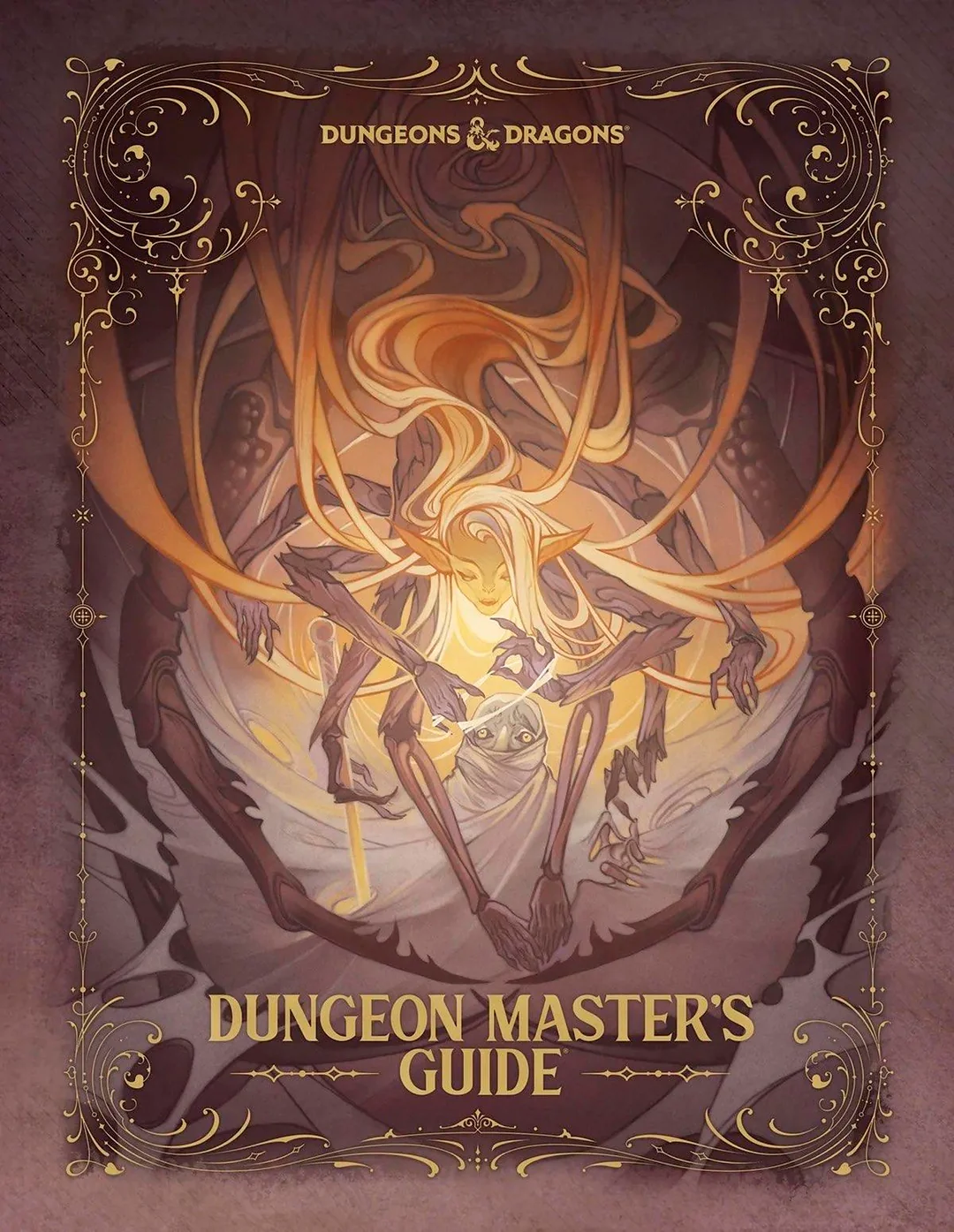
The three core books did not all come out in 2024. The Player's Handbook in September 2024, the Dungeon Master's Guide in November 2024, the Monster Manual in February 2025. When people say "the 2024 rules", they mean this set.
It is still the same game
Fifth Edition did not become a different game, as happened when Fourth replaced Third. A session is still made of turns, attacks, spell slots, and a short conversation about what the characters do.
If a rule is reprinted in the new book, the new text is the one that counts. An adventure written for 2014 can still be played. A subclass from an older book can still be chosen, if everyone agrees, and it arrives at level 3 like every other subclass.
Creature stat blocks in the 2025 Monster Manual were rewritten. An old monster and its new entry do not always have the same numbers. Check the stat block you are actually using, before the fight starts.
How you build a character
- In 2014 you started from race, and ability bonuses lived there. In 2024 the word is species, and those bonuses live on the background. A species gives traits, not, for example, a higher Strength only because you are an orc.
- The background now also gives an origin feat at level 1. Feats are also no longer an optional rule: at the levels where you used to choose between this or an ability increase, you now gain a feat, which almost always includes a +1. A plain +2 still exists, as a separate option.
- The 2024 Player's Handbook adds orc, Goliath, and aasimar, and drops half-elf and half-orc as separate options. A character can still have mixed parentage in the story, but for the rules you pick one species. A human, for example, no longer gets +1 to every ability, they gain Heroic Inspiration whenever they finish a long rest, one extra skill, and a second origin feat.
- Every class gains its subclass at level 3, and the new book prints four for each of them. In 2014 the cleric picked a domain at level 1, the druid and the wizard at level 2, so a single cleric level taken for the domain no longer works the same way. Several 2014 options are not in the new Player's Handbook (including some wizard schools), they are not banned, if everyone agrees they can still be used, at level 3.
What you notice in the first fight
The changes can be learned in one session, they change the rhythm more than the new subclasses do.
- Weapon mastery. Barbarian, fighter, paladin, ranger, and rogue can add an effect when they attack with a weapon they have mastered: push, slow, knock prone, or deal a little damage even if the attack misses. Fighting with two light weapons is still possible, and one mastery moves the extra attack into the Attack action, so the bonus action stays free.
- Surprise. In 2014 a surprised creature skipped its first turn. In 2024 it has disadvantage on the initiative roll, then plays as normal.
- Exhaustion. There are still six levels, and at the sixth you still die. Each level now does the same thing: d20 rolls get worse, and speed drops. There is no longer a different effect at every step.
- Grappling. It is no longer a contest between Athletics and Acrobatics. An unarmed strike can grab. The target chooses Strength or Dexterity and makes a saving throw.
- Potions. In the 2024 Dungeon Master's Guide, drinking a potion or giving one to someone else is a bonus action. In 2014 it was an action. Plenty of people were already playing with this bonus-action change, even if it was not listed in the book.
- Inspiration. In 2014 it gave advantage on a roll. Heroic Inspiration in 2024 is spent to reroll any die. You only keep one.
Spells and classes that change the pace
Not every spell was rewritten.
- Divine Smite is a spell. You cast it as a bonus action right after you hit, so once on your turn. You can no longer drop two smites in the same round, and Counterspell can interrupt it, because it has a verbal component. Once per long rest, the paladin can cast it without spending a spell slot.
- Counterspell no longer automatically cancels a spell of the same level or lower. The creature casting the spell makes a Constitution saving throw. On a failure, the spell fizzles and the spell slot is not spent.
- On your turn you can spend only one spell slot to cast a spell. Cantrips, and spells that do not spend a slot, are still allowed. A reaction on another creature's turn, such as Shield or Counterspell, is a different turn.
- Group conjurations, such as Conjure Animals, no longer fill the map with a stat block for every wolf. They become an area that deals damage. Summoning spells that bring a single creature remain actual creatures.
- Spiritual Weapon now requires concentration. In 2014 it stayed up without concentration and took the bonus action every turn, without competing with other spells.
- Wild Shape is a bonus action. The druid keeps their own hit points and gains temporary hit points, instead of replacing their hit points with the beast's.
- Cure Wounds and Healing Word heal more than they did in 2014. Staying on your feet matters more than the old habit of waiting for someone to drop, then standing them back up with a tiny heal.
- The monk was rewritten. The resource is called Focus, and at low levels you can use it without running dry after two rounds. The ranger no longer depends on a favored terrain or a favored enemy that might never show up in the campaign. They cast spells from level 1, and Hunter's Mark sits at the center of the class.
How to choose at your table
I advise against mixing 2014 with 2024, unless you have a great deal of experience with both and can therefore keep the game balanced, but even then it would weigh down the DM's already heavy workload even more.
You do not have to convert the world. Places, factions, and history stay. What you update are the characters and the procedures of combat. If you like an old rule better you can use it, but make it clear that it is an exception.
On Omniarole the compendium keeps the 2014 SRD and the 2024 SRD together: while you prep the game session, you can read a spell, an item, or a creature from either version and import it into the bestiary.